

- Index
- >Research
- >Researcher Profiles
- >Sébastien Goeb
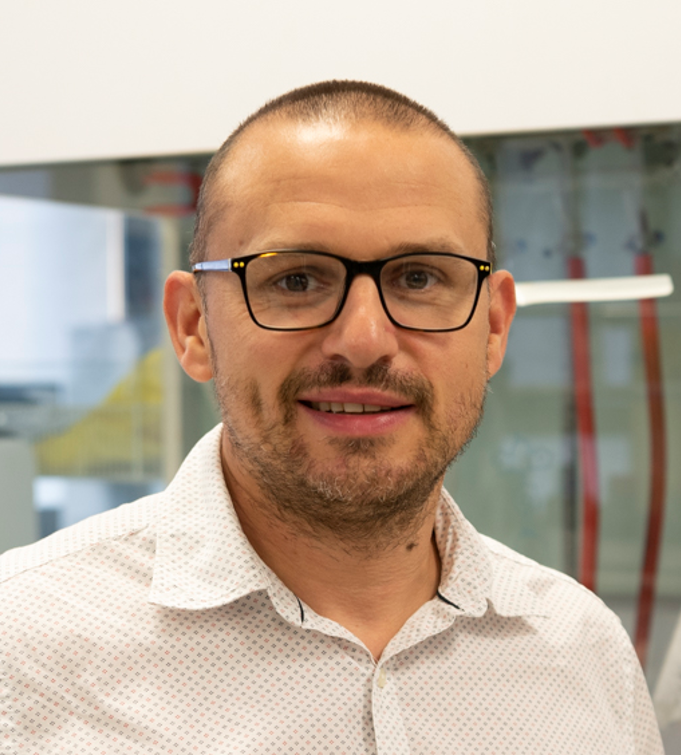
Sébastien GOEB
CNRS Research Director
Contact
sebastien.goeb@univ-angers.fr • Office K116
Coordination Self-Assembly • Redox-Active Cages • Interlocked Architectures • Host–Guest Chemistry • Chiral Systems
External Profiles
ORCID • HAL • Google Scholar
Biography
Sébastien Goeb designs stimuli-responsive molecular architectures built by coordination-driven self-assembly. His work focuses on metal–organic cages incorporating redox-active units (tetrathiafulvalene, extended TTF, dithiafulvene), whose shape, guest-binding ability or assembly state can be switched by an electrochemical stimulus. Key questions include how to trigger the uptake and release of guests on demand, how to build interlocked and chiral cages with controlled topology, and how to transfer these functions to surfaces.
Career
|
|
|
CNRS Research Director, MOLTECH-Anjou, Angers |
|
|
|
Habilitation (HDR), University of Angers |
|
|
|
LuhmerCNRS Researcher (CR), MOLTECH-Anjou, Angers |
|
|
|
Postdoctoral fellow, Laboratoire de Synthèse Organique, Marseille (Dr J.-L. Parrain) |
|
|
|
Postdoctoral fellow, Center for Photochemical Sciences, Bowling Green State University, USA (Prof. F. N. Castellano) |
|
|
|
PhD in chemistry, Laboratoire de Chimie Moléculaire, Université Louis Pasteur, Strasbourg (Dr R. Ziessel) |
Current supervision
Overall: 7 PhD theses defended (5 as main supervisor), 6 postdoctoral researchers and 16 Master 2 students supervised.
|
|
|
Research activities
Redox-controlled host–guest chemistry
Electron-rich TTF-based ligands are assembled into cages, tweezers and macrocycles whose cavity can be addressed electrochemically. Oxidation of the walls modulates the binding of neutral guests such as fullerenes or polyaromatics and allows their reversible uptake and release, either through guest exchange, disassembly of the cage or supramolecular dimerization of the host.
Interlocked cages
Coordination cages built from large planar π-surfaces can interpenetrate to form mechanically interlocked architectures. Controlling this catenation, and switching reversibly between free cages, host–guest complexes and interlocked dimers with external stimuli, gives access to chiral and adaptive supramolecular systems.
Redox-controlled transformations
As the geometry of redox-active units such as π-extended TTF changes upon oxidation, electron transfer can be used to reshape entire assemblies. Oxidation triggers reversible structural rearrangements or redirects self-assembly towards architectures of different shape and nuclearity, a strategy developed in collaboration with G. H. Clever (TU Dortmund).
Coordination cages on surfaces
With C. Gautier, redox-active cages are grafted onto electrode surfaces through monolayers, in order to control electrochemically their binding ability at the interface and move towards functional devices.
Projects & funding
|
Project |
Funding |
Role |
Period |
|---|---|---|---|
|
REDKNOTS – Redox-modulated molecular knots |
ANR PRC (AAPG 2026) |
Coordinator |
2026–2031 |
|
CHERISH – Chiral electro-responsive heteroleptic cages (postdoc) |
EUR LUMOMAT |
PI |
2027–2028 |
|
HETEROX – Redox-modulated heteroleptic cages |
CNRS IRP (with TU Dortmund) |
PI |
2027–2029 |
|
ROBINSON – Redox-controlled binding of cages grafted on monolayered surfaces |
EUR LUMOMAT |
PI (with C. Gautier) |
2023–2026 |
|
RESEARCH – Redox-active self-assembled heteroleptic chiral cages |
CNRS IEA (with TU Dortmund) |
PI |
2023–2024 |
|
CIC – Cage in Cage |
CNRS |
PI |
2022–2023 |
|
PoDACC – Polycatenation of donor–acceptor coordination cages |
ANR PRC |
Coordinator |
2021–2024 |
|
INTERLOCKED – Interpenetrated donor–acceptor cages for solar cells |
CNRS Emergence@INC |
PI |
2018–2019 |
|
BOMBER – Triggering guest release from electro-active self-assembled cages |
ANR JCJC |
PI |
2014–2018 |
Societies and networks membership
|
|
Responsibilities
|
|
|
Distinctions
|
|
|
Software development
|
|
|
Selected publications
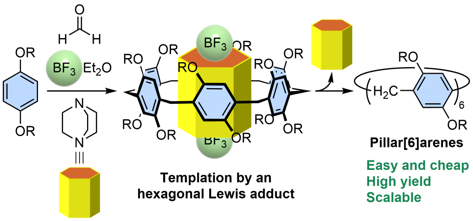
- Efficient templated synthesis of pillar[6]arenes by in situ generated Lewis adducts
- Alexia Dussart, Sébastien Lengelé, Ivan Jabin, Roy Lavendomme
- Organic Chemistry Frontiers, 2026, 13, pp.5559-5567. ⟨10.1039/D6QO00565A⟩
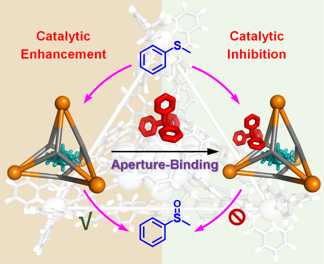
- Engineering Cavity and Aperture Binding Sites Within a Metal‐Organic Cage for Up‐ and Down‐Regulation of Catalysis
- Yan Xu, Gen Li, Shihang Liang, Gaël De Leener, Michel Luhmer, Roy Lavendomme, En-Qing Gao, Dawei Zhang
- Angewandte Chemie International Edition, 2025, 64, pp.e202507981. ⟨10.1002/anie.202507981⟩
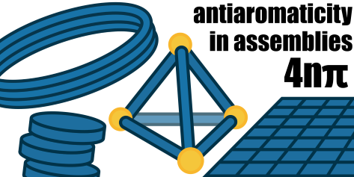
- Antiaromaticity in molecular assemblies and materials
- Roy Lavendomme, Masahiro Yamashina
- Chemical Science, 2024, 15 (45), pp.18677-18697. ⟨10.1039/D4SC05318D⟩
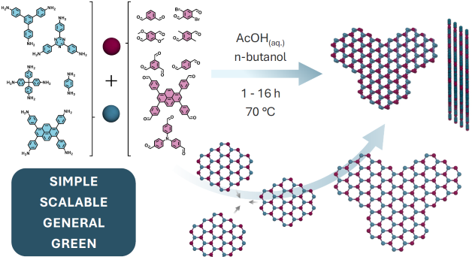
- Mild and Scalable Conditions for the Solvothermal Synthesis of Imine‐Linked Covalent Organic Frameworks
- Andreas Laemont, Gilles Matthys, Roy Lavendomme, Pascal Van Der Voort
- Angewandte Chemie International Edition, 2024, 63 (51), pp.e202412420. ⟨10.1002/anie.202412420⟩
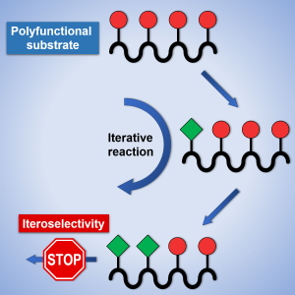
- Iteroselectivity, the missing sibling of chemo-, regio-, and stereoselectivities
- Roy Lavendomme, Ivan Jabin
- Cell Reports Physical Science, 2022, 3 (11), pp.101121. ⟨10.1016/j.xcrp.2022.101121⟩
- MoloVol: an easy-to-use program for analyzing cavities, volumes and surface areas of chemical structures
- Jasmin B. Maglic, Roy Lavendomme
- Journal of Applied Crystallography, 2022, 55 (4), pp.1033-1044. ⟨10.1107/S1600576722004988⟩

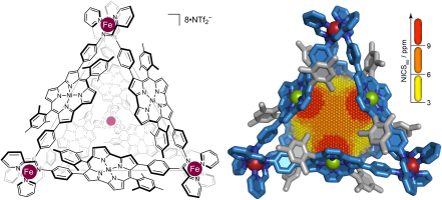
- An antiaromatic-walled nanospace
- Masahiro Yamashina, Yuya Tanaka, Roy Lavendomme, Tanya K. Ronson, Michael Pittelkow, Jonathan R. Nitschke
- Nature, 2019, 574 (7779), pp.511-515. ⟨10.1038/s41586-019-1661-x⟩
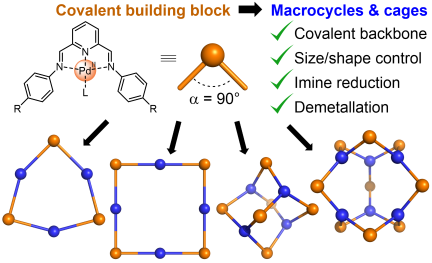
- Metal and Organic Templates Together Control the Size of Covalent Macrocycles and Cages
- Roy Lavendomme, Tanya K. Ronson, Jonathan R. Nitschke
- Journal of the American Chemical Society, 2019, 141 (30), pp.12147-12158. ⟨10.1021/jacs.9b06182⟩
Full publication list
2026
- titre
- Synthesis of C 3v ‐Symmetrical 1,3,5‐Tris‐ O ‐Me‐Calix[6]arene: New Perspectives
- auteur
- Martin Lepeintre, Paul Couderc, Haron Harbi, Alexia Dussart, Roy Lavendomme, Nikolay Tumanov, Johan Wouters, Benoit Colasson, Ivan Jabin
- article
- European Journal of Organic Chemistry, 2026, ⟨10.1002/ejoc.202500947⟩
- Accès au texte intégral et bibtex
-


- titre
- Potent Biological Activity by a Synthetic Cu(I) Cationophore Redistributing Intracellular Copper Pools
- auteur
- Nathan Renier, Gianluca Weyckmans Mele, Pierre Lelievre, Mélanie Boeckstaens, Roy Lavendomme, Akin Aydogan, Yannick Dussein, Peggy Charbonnier, Laurence Puillet-Anselme, Benoit Chovelon, Hiram Castillo-Michel, Nikolay Tumanov, Johan Wouters, Lucie Sancey, Benoît Busser, Anna Maria Marini, Giulia Veronesi, Ivan Jabin, Aurélien Deniaud, Hennie Valkenier
- article
- Journal of the American Chemical Society, 2026, 148 (1), pp.593-604. ⟨10.1021/jacs.5c15335⟩
- Accès au texte intégral et bibtex
-

2025
- titre
- Development of a water-soluble ouroboros-like calix[6]arene-trisimidazole-based ligand for enhanced binding of zinc
- auteur
- Romain Carpentier, Roy Lavendomme, Benoit Colasson, Kristin Bartik, Ivan Jabin
- article
- Dalton Transactions, 2025, 54 (3), pp.1052-1062. ⟨10.1039/d4dt03158j⟩
- Accès au bibtex
-
